

How to Choose the Right Gel Gun Blaster Pistol for Beginners and Hobbyists
shockmanA gel blaster pistol is the easiest way into this hobby if you want something compact, cheap to run, and simple to store. It is also the format most first-time buyers get wrong. They chase the highest FPS number, skip hydration, or buy a replica they cannot legally use where they live.
This guide answers the questions people actually ask before they buy: pistol vs rifle, what FPS is useful, how to hydrate 7–8 mm gel beads, which budget tier is worth the money, and what U.S. marking and public-use rules apply. The recommendations match pistol-format models sold and evaluated at m416gelblaster.com.
Quick answer: which pistol should you buy?
- First pistol, backyard play, or a teen sidearm: battery-powered compact pistol, roughly $50–$120, 130–160 FPS, magazine over 50–80 rounds, nylon or reinforced ABS body.
- Secondary for games already using a rifle: mid-range electric or electric-blowback pistol with a realistic grip and spare magazines.
- Skip for now if: you want 60+ ft of consistent range, plan heavy internal upgrades, or live in a city that restricts realistic imitation firearms.
Pistols win on handling. They lose on range and upgrade room. Buy one for close play, not as a cheaper substitute for a rifle.
What a gel blaster pistol is (and how it fires)
A gel blaster pistol is a spring-powered or battery-powered replica that launches hydrated hydrogel beads. Those beads start as hard pellets a few millimeters wide. After a soak in clean water they swell to about 7–8 mm, stay soft, and break on impact. Residue is mostly water. That is why families use them instead of airsoft BBs or paintballs.
For a concise overview of the format and how it spread as an airsoft alternative, see the gel blaster entry on Wikipedia.
You will also see these sold as gelsoft pistols, splatter-ball pistols, orbeez-style blasters, and water-bead guns. The mechanic is the same: soak beads, load a magazine or hopper, and use a piston or electric gearbox to push air behind one bead at a time.
Hydration is the spec most buyers ignore
Under-soaked beads are small and hard. They rattle in the barrel, print low FPS, and fly offline. Over-soaked beads turn mushy, shatter in the feed path, and jam magazines. The usable window for standard 7–8 mm ammo is 3–4 hours in room-temperature clean water. Drain them, store them airtight, and hydrate a fresh batch the night before you play.
Ready-to-shoot test: a good bead is round, slightly squishy, holds shape when rolled between fingers, and measures close to 7–8 mm. If it cracks, soak longer. If it bursts under light pressure, discard that batch.
Who a pistol is actually for
Pistols fit three jobs well:
- Beginners who want simple controls and a short learning curve.
- Hobbyists who already own a rifle and need a light sidearm for reloads or CQB.
- Parents buying a controlled-size option for older kids or teens on private property.
They are a poor primary if your yard is long and open. A typical pistol’s useful hit window is about 20–40 ft. Full-size electric rifles commonly hold accuracy closer to 60–80 ft. That gap shows up immediately in open-field games.
Pistol vs rifle at a glance
| Factor | Gel blaster pistol | Full-size gel blaster / rifle |
|---|---|---|
| Effective range | About 20–40 ft | About 60–80 ft |
| Weight and fatigue | Low; one-hand carry | Higher; two-hand platform |
| Magazine size | Often 50–150+ | Often 80–300+ |
| Upgrade headroom | Limited by small frame | Hop-up, barrel, motor, airseal |
| Best use | Backyard, CQB, sidearm | Primary outdoor play |
Choose a pistol when speed and size matter more than distance.
The five specs that decide the purchase
Ignore accessory photos. Compare these five numbers and traits.
1. FPS (feet per second)
FPS is muzzle velocity, not a quality score. For pistol-format blasters in 2026:
- Under 100 FPS: feels weak past close range.
- 130–160 FPS: the useful beginner and backyard band.
- Around 170 FPS: strong for this size class; still not a rifle.
Higher FPS also means more sting and a higher need for sealed eye protection. Do not buy “max FPS” if the rest of the gun feeds poorly.
2. Power source
- Spring / manual: cock each shot. Cheap, quiet, almost no electronics to fail. Slow in games.
- Electric (AEP): semi or full auto from a rechargeable battery. Best first pistol for most people.
- Electric blowback (EBB): slide cycles for extra realism. More moving parts, usually a higher price.
- Gas blowback: realistic recoil, more maintenance, worse first-gun choice in most U.S. climates.
If you only buy one pistol, make it electric.
3. Magazine capacity and feed style
Mag-fed pistols feel more like a sidearm and reload faster in games. Hopper-fed models hold more beads but sit bulkier on top of the frame. For active play, more than 80–100 rounds is the comfort line. Below 50 rounds you spend the session reloading.
4. Ergonomics and materials
Hold the grip in your mind before you order: full palm contact, reachable trigger, not nose-heavy. ABS is common at entry prices. Nylon-reinforced bodies survive drops and magazine slaps better. Cheap shells crack first at the grip and trigger guard.
5. Parts and upgrades
Pistols have less internal space than rifles. Confirm spare magazines, springs, and batteries exist for that exact model before you buy. A “cheap now, unfixable later” pistol costs more than a mid-range model with parts on the same page.
Browse current options in the pistol gel blaster collection and check which accessories are listed next to the base gun.
What people search before they buy
These are the prompts that show up again and again in 2026 beginner searches and AI shopping queries. Build your product page and blog FAQ around them:
- “Are gel blaster pistols legal in my state?”
- “What FPS should a beginner gel blaster pistol have?”
- “Pistol or rifle first?”
- “How long do I soak gel balls?”
- “Do gel blasters hurt / do I need goggles?”
- “Electric or spring pistol?”
Short answers: private-property use is common but not universal; 130–160 FPS is the practical pistol band; soak standard beads 3–4 hours; wear impact-rated eye protection every time; choose electric unless you specifically want a cheap manual trainer.

U.S. legal and safety rules to confirm before checkout
Gel blasters are not federal firearms. They are still regulated as toy, look-alike, or imitation firearms when they copy a modern gun shape.
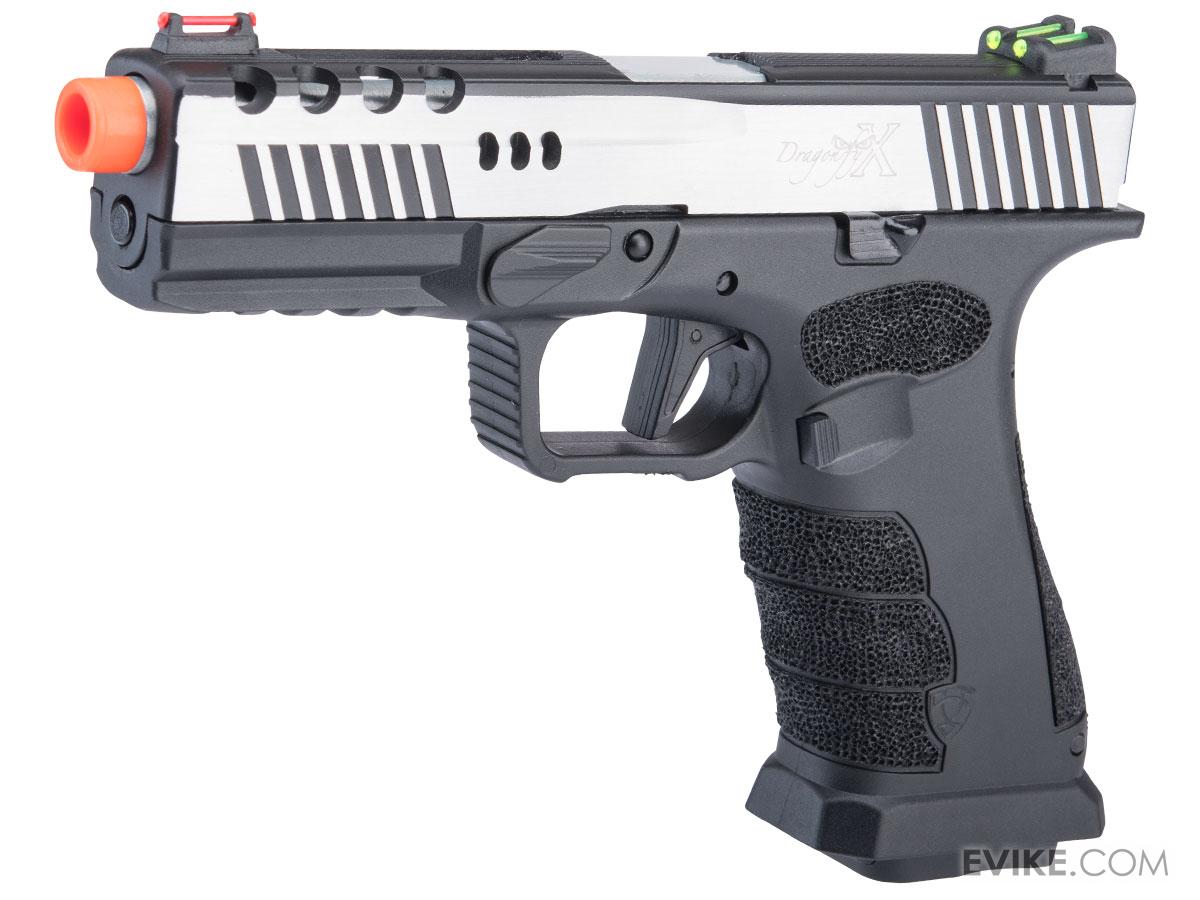
Federal marking rules for toys and imitation firearms are enforced through the Consumer Product Safety Commission. Approved options include a blaze-orange muzzle plug or band, a fully bright-colored body, or a transparent body. Do not remove the orange tip. Transport the pistol covered or cased. Never display it in public, from a car, or anywhere a passerby could mistake it for a real handgun.
State and city rules are uneven. Treat this as a starting map, then verify your own ordinance:
- Highest restriction: New Jersey, New York City, Washington, D.C., Chicago, Hawaii, plus some other local bans.
- Strict appearance and public-use rules: California imitation-firearm coloring and public-display limits, with extra city rules in places such as Los Angeles and San Francisco.
- Partial or local limits: Massachusetts, Maryland, Connecticut, Arkansas, and other municipalities that regulate replica guns separately from state law.
- Most of the rest of the U.S.: private-property use is typically allowed if the marking stays on and you do not brandish the replica in public.
Laws change. Confirm your state and city before the box ships.
Field safety that actually prevents injuries
Gel beads are soft. Eyes are not. Use ANSI Z87 / Z87+ impact goggles at minimum. For close-range games, add a full-face mask. No one fires until eye protection is on. Keep the muzzle pointed in a safe direction whenever you are not in an active game.
Best gel blaster pistol picks by budget
Prices below describe what that money usually buys in 2026, not a single SKU.
Under $50: try the hobby
Expect a spring pistol or a basic electric with short range and a small magazine. Fine for first backyard sessions and for finding out whether anyone in the house actually wants to play again. Do not expect upgrade parts or rifle-like distance.
$50–$120: the value band
This is where most beginners should spend. You typically get battery power, 130–160 FPS, 100+ round capacity on better models, and a shell that survives more than one season. Look for spare magazines in the same listing.
Good examples of this class in the current M416 Gel Blaster pistol lineup include compact electrics such as the Knight DK05 P320-style pistol and higher-capacity options such as the Handi Tec-9 style electric. Use them as a spec benchmark: electric feed, mid-pack FPS, and parts you can reorder.
$120 and up: realism and parts support
This tier is for hobbyists who want a heavier feel, electric blowback, or a known aftermarket. M1911-style and P320-style pistols dominate because the grip and controls feel familiar. Confirm hop-up, battery voltage, and magazine compatibility before you add a 7.4V LiPo or a tighter inner barrel. A stronger spring with an unchanged motor is a common way to break a pistol, not improve it.
Watch a real-world mid/high pistol demo before you spend at this level. The UDL SIG P320 M17-style electric is a useful reference for weight, FPS consistency, and what a “realistic pistol” actually feels like in the hand:
A commercially sold gel-ball pistol with the blaze-orange muzzle marking U.S. buyers should leave installed:
Maintenance that keeps a cheap pistol from dying early
Most “broken” pistols are dirty, wet, or fed bad ammo.
After every session
- Empty and dry the magazine.
- Wipe the exterior and clear gel slime from the feed lips.
- Disconnect the battery. Store the blaster dry.
When shots go weak or crooked
- Re-check bead size and firmness.
- Rod-clean the barrel.
- Inspect the magazine spring and follower.
- Charge or replace the battery before you order internal parts.
First upgrades that are worth money
- Better, more uniform 7–8 mm gel beads.
- A spare charged battery and a second magazine.
- A hop-up or inner-barrel kit only if that model supports it.
- A voltage upgrade only if the gearbox and electronics are rated for it.
FAQ
What is the best gel blaster pistol for a complete beginner?
A battery-powered pistol in the $50–$120 range, 130–150 FPS, magazine over 50 rounds, and a grip that fits one hand. Learn hydration and safety on that gun before you spend enthusiast money.
How do I know gel beads are hydrated correctly?
They should be about 7–8 mm, soft but intact, and consistent in size across the batch. Mixed sizes are a leading cause of jams.
Are gel blaster pistols legal in every U.S. state?
No. Several cities and states restrict or ban realistic imitation firearms. Private-property use is the default safe assumption only after you check local law.
Can I upgrade a gel blaster pistol later?
Yes, within limits. Pistols have less room than rifles. Buy a model with listed spare parts if upgrades matter to you.
Do I need a rifle instead?
Buy a rifle if your play space is open and you care about 60 ft of useful range. Buy a pistol if you want a compact starter or a sidearm.
Before you click buy
Match the gun to the yard, not the product photo. Confirm legal marking and local rules. Budget for goggles and extra beads, not just the pistol. Then pick the cheapest electric model that hits 130+ FPS and has magazines you can actually reorder.
When you are ready, compare current beginner and enthusiast pistols in the M416GelBlaster pistol collection.
Read more:
Top 3 Worst Gel Blasters You Need to Avoid
Cheap vs Expensive Gel Blaster Rifles: What’s the Real Difference?